

Transitional Safeguarding in Greater Manchester: why system leadership matters for young people facing complex risk
Transitional Safeguarding in Greater Manchester: why system leadership matters for young people facing complex risk
If we are serious about improving outcomes for young people facing exploitation and other complex risks, we need safeguarding systems that reflect the reality of how young people grow up. Risk does not disappear on a person’s 18th birthday, yet too often, support changes abruptly at that point, shaped by service boundaries rather than by a young person’s needs, relationships or stage of development.
That is why Transitional Safeguarding matters. It offers a way of thinking about safeguarding that is more fluid across adolescence and young adulthood, drawing on the strengths of both children’s and adults’ services while recognising that neither system, on its own, is fully designed for young people aged 16 to 25 who are living with complex harm.
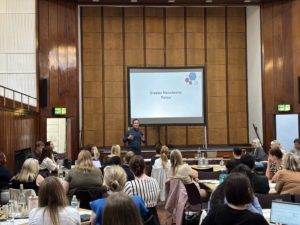
Across Greater Manchester, this is a key priority within our Complex Safeguarding Strategy. Over recent months, partners have been working through a sustained acceleration phase to strengthen transitional safeguarding in practice. This has included joint leadership conversations between children’s and adults’ social care, local experiments to test new approaches, and the development of shared practice principles shaped through multi-agency consultation.
It requires shared ownership across systems, sustained senior leadership and an authorising environment that allows local areas to test, learn and adapt. Trusted relationships, consistency and developmental understanding all matter, but they only take root when the wider system supports them.
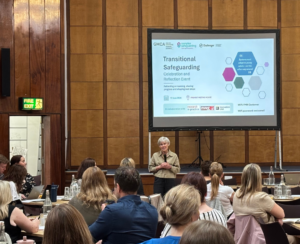
Our showcase event on 17 June, opened by Deputy Mayor for Safer and Stronger Communities Kate Green, was an opportunity to recognise the progress made so far across Greater Manchester, bring together learning from local areas and strengthen collective commitment for the next phase. The event also featured a panel discussion with Dez Holmes, Director of Research in Practice and a nationally recognised expert on Transitional Safeguarding; Steve Baguley, Education and Transition Lead at NWG Network; and Cath Dillon, Director of Innovation at Greater Manchester Innovation Unit, who shared perspectives on the challenges and opportunities involved in creating more connected safeguarding responses for young people. It was also a chance to contribute to a wider national conversation: how do we create safeguarding responses that are centred on need rather than age, and how do we move from ambition to long-term practice change?
The importance of this agenda is further underlined by the Government’s recent announcement of an independent review into the deaths of care-experienced young people leaving the care system. The review reflects growing recognition that some young adults continue to face significant vulnerability beyond the age of 18 and highlights the need for stronger, more connected support during the transition to adulthood.
Greater Manchester remains committed to sustaining this work through senior leadership, partnership ownership and shared learning across social care, health, police, the voluntary sector and lived experience. Transitional Safeguarding is not a finished model. It is a collective shift in how we think, lead and work together so that young people do not face avoidable gaps in support at one of the most important points in their lives.
Read our Complex Safeguarding Strategy.
Article posted on: 17/06/2026 02:06pm